by William C. Leikam
President, CEO & Co-founder, Urban Wildlife Research Project
The Sixth Mass Extinction
Part 2
Summary of Part 1 — The sixth mass extinction is happening globally, with extinction rates 1,000 to 10,000 times higher than normal. This is seen locally at the Palo Alto Baylands Nature Preserve, where wildlife is limited to a narrow, fragmented strip between the San Francisco Bay and Highway 101. This habitat loss causes declining biodiversity, increased inbreeding, disease spread, and forces wildlife into closer contact with humans, leading to crop damage, safety concerns, disease transmission, and social conflicts. This crisis isn’t distant or far away. It affects our own backyards, and we must act to prevent extinction, starting with local efforts in our communities.
At the same time, we are experiencing global warming, which has led to sea-level rise in the system. If we also include human-made global warming, i.e., the use of oil, etc., in this mix, the problem becomes even more severe. A combination of these two global events, the decline of biodiversity and global warming, has the power to uproot people from their traditional places and livelihoods, as is happening along our southern border and elsewhere in the world. The loss of biodiversity fosters mass migrations of people because, due to substantial climate changes, their fields can no longer grow enough food not only for their families but also for their livestock and to sell at local markets. When governments cannot or will not address these issues, civil unrest boils over. We have seen much of this displacement across South America and elsewhere.
The story of El Bosque, a fishing village in Tabasco on the Gulf of Mexico coast, is a well-documented case of a Mexican fishing community being overwhelmed by rising seas. El Bosque was a small fishing and coastal town in Centla, Tabasco, where many families had lived and worked from the sea for generations. It was their home.
Starting around 2019, the sea began eroding the shoreline quickly. Homes, streets, a kindergarten, and the local school have been destroyed or lost to the encroaching Gulf of Mexico. Coastal erosion and rising sea levels have swallowed large areas of land, leaving many houses in ruins and forcing dozens of families to move inland because there’s nothing left to protect them from the ocean. The community has become a symbol of climate displacement in Mexico, with locals describing how their way of life — based on fishing and living by the sea — has been overwhelmed by rising sea levels. As people were forced from their homes, the Mexican government had to build a new village for them. One man I heard being interviewed said that since moving, he has felt a deep, deep loss.
This case is a vivid example in Mexico of how sea-level rise, coastal erosion, and climate change have directly displaced a fishing village. Closer to home, we are seeing the ocean erode beaches in the Half Moon Bay area. Mirada Road, which runs along the beach near the Miramar Inn and the Douglas Beach House, famous for its jazz concerts, is now a one-lane road because the ocean is encroaching, eroding the cliffs and the road. As this continues, one day in the not-too-distant future, all the establishments and private homes along Mirada Road will be gone.
I believe that it was last February, just last month, when the Palo Alto Baylands Preserve experienced the usual King Tide. However, this one was unusual because the tides topped the levees, flooded the park, and caused it to close. Sea level rise is well on its way.
And so, we are facing the sixth mass extinction, which is impacting much of the wildlife on our planet. As a result, the planet’s biodiversity is in serious decline, and the combined effects of this and global warming are sending us signals today that we must act to save our wildlife, our place on Earth, and a sustainable future.
If you have questions or concerns about this article, please contact us at https://urbanwildliferesearchproject.org/contact. We need to know so that we can improve.
What's Happening at UWRP?
Alie Ward’s podcast Ologies can be accessed on any of the podcast “stations” online such as Apple, Spotify iHeart, Podbay, or here at her website https://www.alieward.com/ologies/urocynology. If you chose the website, scroll down the page to find out more. In the very beginning there is a short advertisement before Alie and I get into the fray of it all. Enjoy. If you thought it worthwhile, please, spread the word through your personal networks.
Alie Ward will be doing a book special wherein she will promote my book the Road to Fox Hollow, along with other books published by those people who she interviewed this past year.
Read the latest about Bill in this new article posted on Palo Alto Online: Experts push for creek naturalization after rare beaver died in Palo Alto
Bill was interviewed for an article in the San Jose Mercury News about the effects of noise pollution upon wildlife. Although not quoted in the article, it’s still worth reading: “Learning How Noise Affects Wildlife” Urban sound is unavoidable, but its effects on threatened species are only beginning to be understood. Written by Claudia Steiner, December 27, 2025.
If you or your organization would like to have Bill aka the Fox Guy present one of his four PowerPoint presentations:
1. A Year with the Urban Gray Fox – MOST POPULAR
2. Human Development, Sixth Mass Extinction & Gray Foxes – An historical look at how we got to our present place in history.
3. Gray Fox Cognition – What & How Gray Foxes Perceive – This is a speculative attempt to get inside the mind of a gray fox
4. Corridors & Connections – Sustaining the Health of Our Wildlife – The title says it all
Contact us here https://urbanwildliferesearchproject.org/contact/ and let us know that you would like to have the Fox Guy give a presentation to your organization, corporation, or a home visit.
Bill Will be giving a talk to the Palo Alto University Rotary Club on April 14th, 2026. He will be speaking to the Environmental Volunteers https://www.environmentalvolunteers.org/ecocenter/ at as yet to be determined date.
On April 18th, Bill and an assistant will be at a tabling event at Safari West (https://safariwest.com/) . Come join us on that date. This is a large gathering of most wildlife related organizations in the San Francisco Bay Area.
Bill will give a short presentation in the Elephant Room at Safari West, on July 25th at 8:00 PM. These are always fun events because the parents bring their kids to hear about foxes. Over the years that I’ve done this show; I find that the kids ask better questions than the adults.
Videos and Documentaries
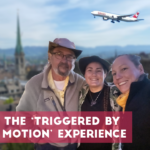
My journey to the University of Zurich, Switzerland, Triggered By Motion
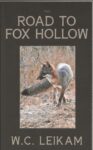
Bill’s book The Road to Fox Hollow can be purchased directly from Bill for a mere $20.00. Just email him through the Contact form on the Urban Wildlife Research Project’s website, leave your email address and he will get back to you. Or you can contact the publisher Di Angelo Publications .
A video documentary about Bill’s work with the foxes and produced at Stanford University by Syler Peralta-Ramos.
What happens when an opossum and a red fox meet in the night?
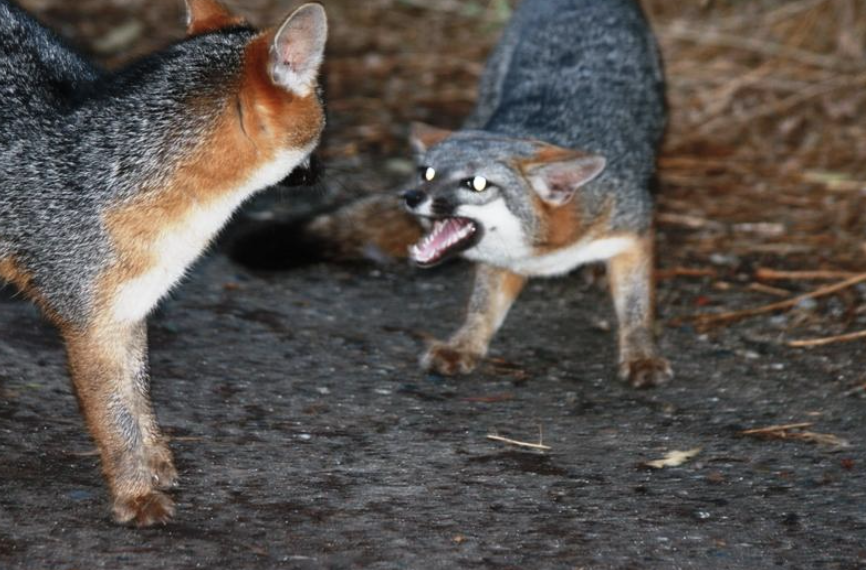
In contrast to two other raccoon discipline videos, this one is rather mild.
Gray Fox Playfulness “Hugging” Behaviors.
See the violence of Discipline Raccoon Style.
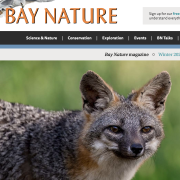
“How to be a Fox” The article about Bill and his ethological approach to his study of the gray fox is online here. Many are calling this a major article in the wildlife press.

Be Sure to check out our YouTube Channel for some incredible wildlife videos.
Grey Fox General Health
NEWS FLASH — The pair of gray foxes that were in the Palo Alto Baylands Nature Preserve several months ago have left the region probably due to the influx of red foxes, and a coyote pack of five – four youngsters and an adult. Presently, we are monitoring them.
Gray Fox, Baylands Goals
Within the permit that allows the Urban Wildlife Research Project to conduct its study of the behavior of the gray fox at the Palo Alto Baylands Nature Preserve, the objectives covered are:
- Monitoring of urban gray fox Denning sites in Palo Alto Baylands.
This is being accomplished during the period when the gray foxes use a den site. It is one of the prime locations for gathering most of the behavioral data of the litter and for adults alike.
- Assessment of status and population trends of Baylands urban gray foxes.
Since January 2019 a pair of resident gray foxes have claimed territory at the Palo Alto Baylands Nature Preserve.
- Identification of habitat features that promote the presence of urban gray foxes.
The Urban Wildlife Research Project is working on a project to remove the concrete from Matadero Creek that will create linkages and corridors between the Santa Cruz Mountain Range and the Palo Alto baylands..
- Assessment of reproductive success and identification of factors that promote successful reproduction.
Open the pinch-point along Matadero Creek by developing thickets that link one area to another, instead of the present island-like habitat.
- Identification and assessment of possible dispersal travel routes.
Dispersal routes move between the Palo Alto Baylands Nature Preserve and the Shoreline region over in Mountain View. In a north-westerly direction the dispersal corridors run just behind the homes bordering the marshlands in East Palo Alto.
Read more about UWRP in the news: