by William C. Leikam
President, CEO & Co-founder, Urban Wildlife Research Project
The Sixth Mass Extinction
Part 1
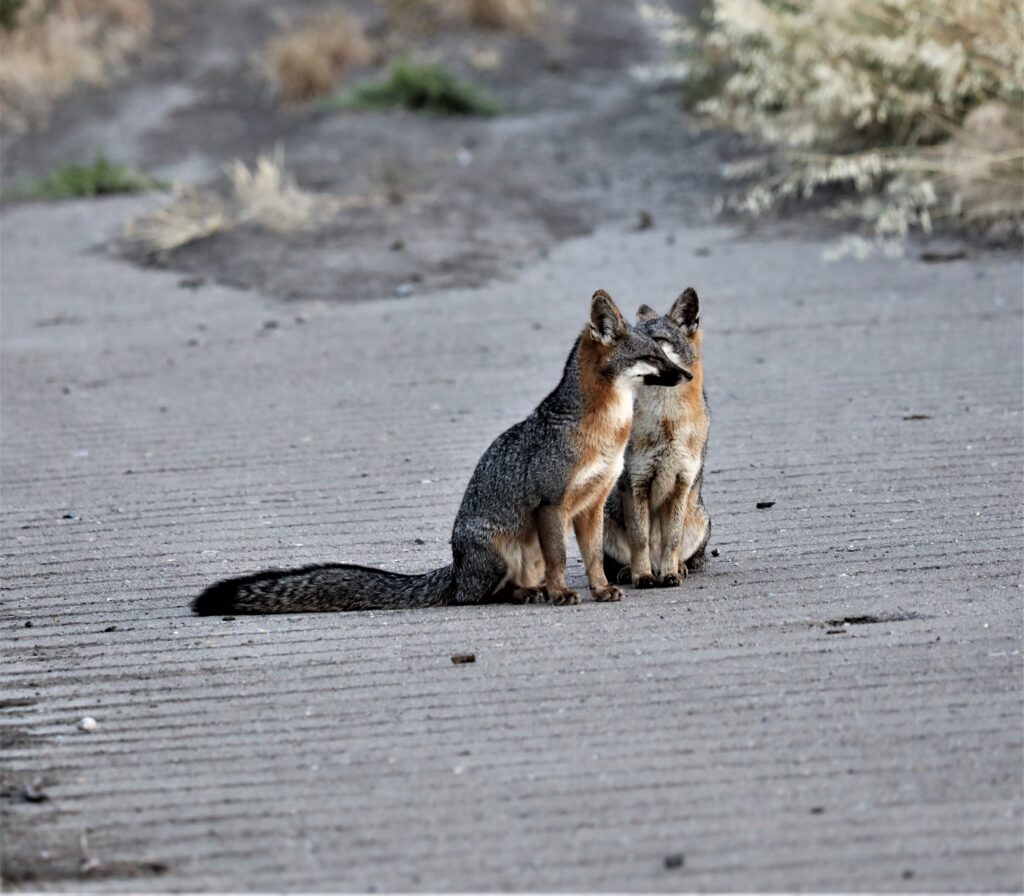
Most people don’t know that presently, the sixth mass extinction, sometimes called the Holocene, is taking place globally. “What if one of the world’s biggest global risks isn’t financial collapse or geopolitical conflict—but the quiet breakdown of the ecosystems that make modern life possible?” (by Suzanne Asha Stone Jan 28, 2026) According to the World Wildlife Fund, “Current extinction rates are estimated between 1,000 and 10,000 times higher than natural background rates. According to Wikipedia, “Wildlife populations have declined dramatically — vertebrate wildlife populations have plummeted by an average of almost 70% since 1970.” This is not happening in some distant place. It is happening right here along the San Francisco Bay, at the Palo Alto Baylands Nature Preserve where I study the behavior of the gray fox, and in your backyard wherever you might live.
Let’s take a closer look at this tragedy unfolding all around us. The greater baylands from Moffett Field to the headquarters of Facebook, is a stretch of some 6.10 miles “as-the-crow-flies,” and from the San Francisco Bay to Highway 101, a distance of 1.14 miles, results in a narrow strip of highly fragmented landscape where wildlife live. Within that strip of land, sometimes referred to as an island for wildlife, we find a disconnected patchwork of habitat that consists of small clusters of wooded areas, where foxes, raccoons, opossums, skunks, and other wild creatures live. All of these are bordered in the east by the bay and to the west by Highway 101 essentially trapping them. Additionally, corporations like Google, Intel, and golf courses, etc. have removed huge regions where wildlife once roamed; regions that do not have enough cover for the animals.
Without the needed territory for all this wildlife to live, the biodiversity of the region is in a constant state of decline. (Biodiversity is defined as “the diversity, number and variety of species of plant, insect, and animal life within a region.” – from Google). As biodiversity declines, it brings with it habitat failure, i.e. a decrease in the number and kind of vegetation; trees, shrubs, vines, and other such that all creatures need for protection and an adequate living space. Because of this, we have seen an increase in inbreeding, in the number of diseases and viruses such as canine distemper that begin to spread into an ever-increasing range throughout the landscape.
“Biodiversity does not disappear quietly. It unravels in lived landscapes: grazing lands, agricultural frontiers, forest edges, and working coastlines. As habitats shrink and ecosystems degrade, wildlife is pushed into closer contact with people. Crop loss, livestock depredation, safety risks, and disease transmission follow. Also, it brings with it political backlash and calls for lethal control. These are not side effects. They are pressure points—the places where biodiversity loss translates directly into economic instability, social conflict, and governance breakdown.”
From: Biodiversity Loss Is a Global Threat — and Coexistence Is the Infrastructure We’re Missing — Suzanne Asha Stone Jan 28, 2026.
And so, no longer is the problem out there somewhere, but it comes right back into our homes as well as impacting the wildlife everywhere and including the Palo Alto Baylands Nature Preserve. From my point of view, we must work to bring this extinction under control and the best place to start is right in one’s backyard.
Part II – Continuing from that last sentence we will take a close look at what happens when we add sea level rise into the system? More about this in our next edition.
If you have questions, or concerns about this article, please contact us at www.urbanwildliferesearchproject.org/contact
We need to know so that we can improve.
What's Happening at UWRP?
Alie Ward’s podcast Ologies can be accessed on any of the podcast “stations” online such as Apple, Spotify iHeart, Podbay, or here at her website https://www.alieward.com/ologies/urocynology. If you chose the website, scroll down the page to find out more. In the very beginning there is a short advertisement before Alie and I get into the fray of it all. Enjoy. If you thought it worthwhile, please, spread the word through your personal networks.
Alie Ward will be doing a book special wherein she will promote my book the Road to Fox Hollow, along with other books published by those people who she interviewed this past year.
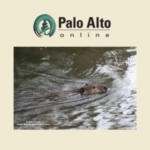
Read the latest about Bill in this new article posted on Palo Alto Online: Experts push for creek naturalization after rare beaver died in Palo Alto
Bill was interviewed for an article in the San Jose Mercury News about the effects of noise pollution upon wildlife. Although not quoted in the article, it’s still worth reading: “Learning How Noise Affects Wildlife” Urban sound is unavoidable, but its effects on threatened species are only beginning to be understood. Written by Claudia Steiner, December 27, 2025.
If you or your organization would like to have Bill aka the Fox Guy present one of his four PowerPoint presentations:
1. A Year with the Urban Gray Fox – MOST POPULAR
2. Human Development, Sixth Mass Extinction & Gray Foxes – An historical look at how we got to our present place in history.
3. Gray Fox Cognition – What & How Gray Foxes Perceive – This is a speculative attempt to get inside the mind of a gray fox
4. Corridors & Connections – Sustaining the Health of Our Wildlife – The title says it all
Contact us here https://urbanwildliferesearchproject.org/contact/ and let us know that you would like to have the Fox Guy give a presentation to your organization, corporation, or a home visit.
Bill Will be giving a talk to the Palo Alto University Rotary Club on April 14th, 2026. He will be speaking to the Environmental Volunteers https://www.environmentalvolunteers.org/ecocenter/ at as yet to be determined date.
On April 18th, Bill and an assistant will be at a tabling event at Safari West (https://safariwest.com/) . Come join us on that date. This is a large gathering of most wildlife related organizations in the San Francisco Bay Area.
Bill will give a short presentation in the Elephant Room at Safari West, on July 25th at 8:00 PM. These are always fun events because the parents bring their kids to hear about foxes. Over the years that I’ve done this show; I find that the kids ask better questions than the adults.
Videos and Documentaries
My journey to the University of Zurich, Switzerland, Triggered By Motion
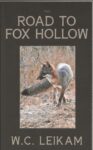
Bill’s book The Road to Fox Hollow can be purchased directly from Bill for a mere $20.00. Just email him through the Contact form on the Urban Wildlife Research Project’s website, leave your email address and he will get back to you. Or you can contact the publisher Di Angelo Publications .
A video documentary about Bill’s work with the foxes and produced at Stanford University by Syler Peralta-Ramos.
What happens when an opossum and a red fox meet in the night?
In contrast to two other raccoon discipline videos, this one is rather mild.
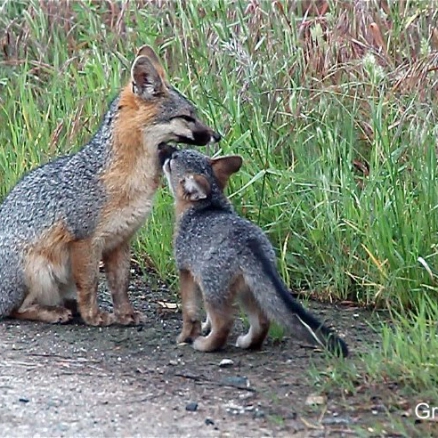
Gray Fox Playfulness “Hugging” Behaviors.
See the violence of Discipline Raccoon Style.
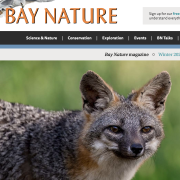
“How to be a Fox” The article about Bill and his ethological approach to his study of the gray fox is online here. Many are calling this a major article in the wildlife press.

Be Sure to check out our YouTube Channel for some incredible wildlife videos.
Grey Fox General Health
NEWS FLASH — The pair of gray foxes that were in the Palo Alto Baylands Nature Preserve several months ago have left the region probably due to the influx of red foxes, and a coyote pack of five – four youngsters and an adult. Presently, we are monitoring them.
Gray Fox, Baylands Goals
Within the permit that allows the Urban Wildlife Research Project to conduct its study of the behavior of the gray fox at the Palo Alto Baylands Nature Preserve, the objectives covered are:
- Monitoring of urban gray fox Denning sites in Palo Alto Baylands.
This is being accomplished during the period when the gray foxes use a den site. It is one of the prime locations for gathering most of the behavioral data of the litter and for adults alike.
- Assessment of status and population trends of Baylands urban gray foxes.
Since January 2019 a pair of resident gray foxes have claimed territory at the Palo Alto Baylands Nature Preserve.
- Identification of habitat features that promote the presence of urban gray foxes.
The Urban Wildlife Research Project is working on a project to remove the concrete from Matadero Creek that will create linkages and corridors between the Santa Cruz Mountain Range and the Palo Alto baylands..
- Assessment of reproductive success and identification of factors that promote successful reproduction.
Open the pinch-point along Matadero Creek by developing thickets that link one area to another, instead of the present island-like habitat.
- Identification and assessment of possible dispersal travel routes.
Dispersal routes move between the Palo Alto Baylands Nature Preserve and the Shoreline region over in Mountain View. In a north-westerly direction the dispersal corridors run just behind the homes bordering the marshlands in East Palo Alto.
Read more about UWRP in the news: