by William C. Leikam
President, CEO & Co-founder, Urban Wildlife Research Project
Gray Foxes & the Mirror
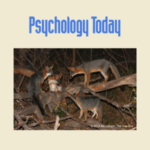
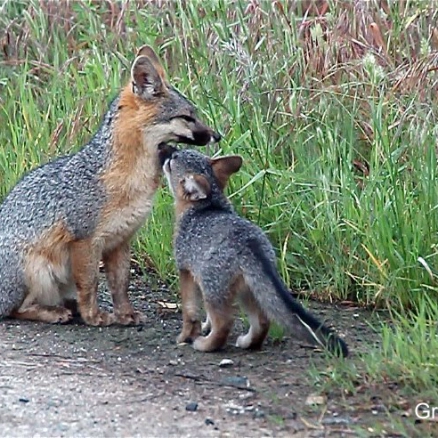
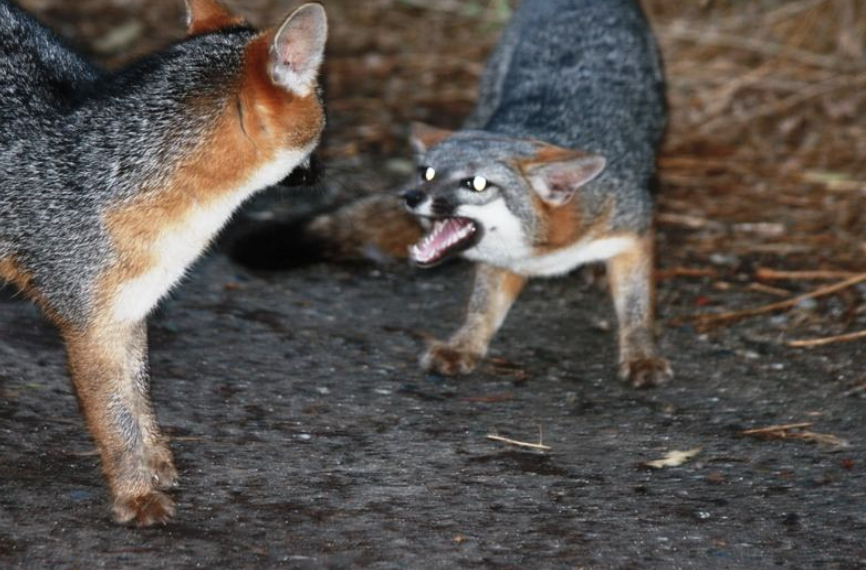
By 2012, I had already learned quite a bit about the behavior of these gray foxes. I had also expanded my range from down in Fox Hollow, to along the back fence of the water treatment plant, and over to the sand filter on the edge of Embarcadero Road. In that small patch of riparian habitat, I saw how the young foxes were being “taught.” I came to call it The School. There, I saw, both live and on video, how they played, wrestled, climbed, and used a pair of Levis cut off at the knees as both bedding material and a “toy.” One of the young foxes played with those shorts, tossing them, catching them, and shaking them as if he were killing his prey. One of the pups used those pants to take a nap on them in the middle of the night. There, I learned that those gray foxes weren’t driven solely by the need to find food. Even the adults spent significant blocks of time playing with and tending to their pups. It was also a time when my curiosity about these amazing gray foxes began to expand in several ways.
Years earlier, I had heard of the mirror test, which might give me a glimpse into these foxes' minds. If an animal recognizes itself in the mirror, that’s a good indication that they know that they exist as an individual. I thought, “If I set up a mirror and put a couple of trail cameras on it, I could see and record how they respond. Do these foxes have a sense of self?” I decided to set up the mirror on the water treatment plant’s sand filter, an expanse of sand about 30 feet wide and maybe 60 feet in length. For the first test, I decided to mount it just outside the Gray Fox School. That was where the foxes often came up from the brush and onto the filter.
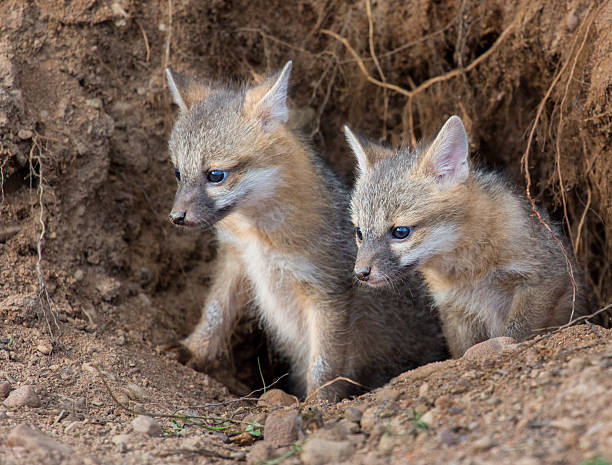
One evening I set it up at about a 45-degree angle to the brushline. I waited. I called, and no sooner had I done so than one of the adults emerged from the brush. Cautiously, slowly, he emerged, his focus on the mirror, this new thing in his environment, something that he’d never before seen. He walked up to it, and the instant – and I do mean the instant – he saw his reflection, he dashed across the sand filter. He stopped, stood for upward of a minute, then walked back toward the mirror. He didn’t walk in front of it; he passed behind it and went down the slope into the brush. I wondered what might be going through that fox’s mind. I decided to wait to see if any of the other foxes would show. I called again, and this time two pups, maybe six months old, came from the brush. They, too, were curious about this thing in their neighborhood. One of them walked right up to the mirror. He moved sideways. The image moved. This startled him, but he did not give up. He pawed at the image, then he did the most remarkable thing I’d ever seen a fox do to date. He walked around behind the mirror, stopped, put his paws on the top edge, and tried to look over and into it. He almost made it, but dropped to the ground and came around to the front again. When he saw himself in the mirror, he must have thought another fox was on the other side.
By then, two other pups of the same age came up from the brush. They too looked into the mirror. They walked behind it, and when they came back around to look at the fox in the mirror, they put their paws on top of the mirror’s frame and toppled it onto the sand. They walked on the mirror, looking down at themselves, but from all indications they didn’t seem to realize that they were looking at themselves. I put the mirror under the tree canopy, back under the gray fox school, and set up a camera facing it. That night the pups had fun with the mirror. Some were highly cautious, but others pushed and pushed until it toppled to the ground. They spent much of the night walking across it and hitting it with their paws,
supposedly trying to get that fox in the mirror to respond. Their activity with the mirror brought some of the adults into the camera’s view, but they didn’t stay long. All-in-all it was instructive to see what these gray foxes did with the mirror. This was the first in a series of encounters with these gray foxes’ minds. This suggests that gray foxes do not have a sense of self- identity as we and other animals such as dolphins, elephants, and the great apes do. They may also have been confused because they had no concept of a mirror.
If you have any suggestions, criticisms, questions, or anything at all, please get back to me, and I’ll reply. Just go to urbanwildliferesearchproject.org/contact and let me know.
What's Happening at UWRP?
Alie Ward’s podcast Ologies can be accessed on any of the podcast “stations” online such as Apple, Spotify iHeart, Podbay, or here at her website https://www.alieward.com/ologies/urocynology. If you chose the website, scroll down the page to find out more. In the very beginning there is a short advertisement before Alie and I get into the fray of it all. Enjoy. If you thought it worthwhile, please, spread the word through your personal networks.
Alie Ward will be doing a book special wherein she will promote my book the Road to Fox Hollow, along with other books published by those people who she interviewed this past year.
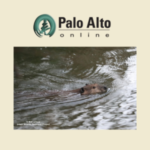
Read the latest about Bill in this new article posted on Palo Alto Online: Experts push for creek naturalization after rare beaver died in Palo Alto
Bill was interviewed for an article in the San Jose Mercury News about the effects of noise pollution upon wildlife. Although not quoted in the article, it’s still worth reading: “Learning How Noise Affects Wildlife” Urban sound is unavoidable, but its effects on threatened species are only beginning to be understood. Written by Claudia Steiner, December 27, 2025.
If you or your organization would like to have Bill aka the Fox Guy present one of his four PowerPoint presentations:
1. A Year with the Urban Gray Fox – MOST POPULAR
2. Human Development, Sixth Mass Extinction & Gray Foxes – An historical look at how we got to our present place in history.
3. Gray Fox Cognition – What & How Gray Foxes Perceive – This is a speculative attempt to get inside the mind of a gray fox
4. Corridors & Connections – Sustaining the Health of Our Wildlife – The title says it all
Contact us here https://urbanwildliferesearchproject.org/contact/ and let us know that you would like to have the Fox Guy give a presentation to your organization, corporation, or a home visit.
Videos and Documentaries
My journey to the University of Zurich, Switzerland, Triggered By Motion
Bill’s book The Road to Fox Hollow can be purchased directly from Bill for a mere $20.00. Just email him through the Contact form on the Urban Wildlife Research Project’s website, leave your email address and he will get back to you. Or you can contact the publisher Di Angelo Publications .
A video documentary about Bill’s work with the foxes and produced at Stanford University by Syler Peralta-Ramos.
What happens when an opossum and a red fox meet in the night?
In contrast to two other raccoon discipline videos, this one is rather mild.
Gray Fox Playfulness “Hugging” Behaviors.
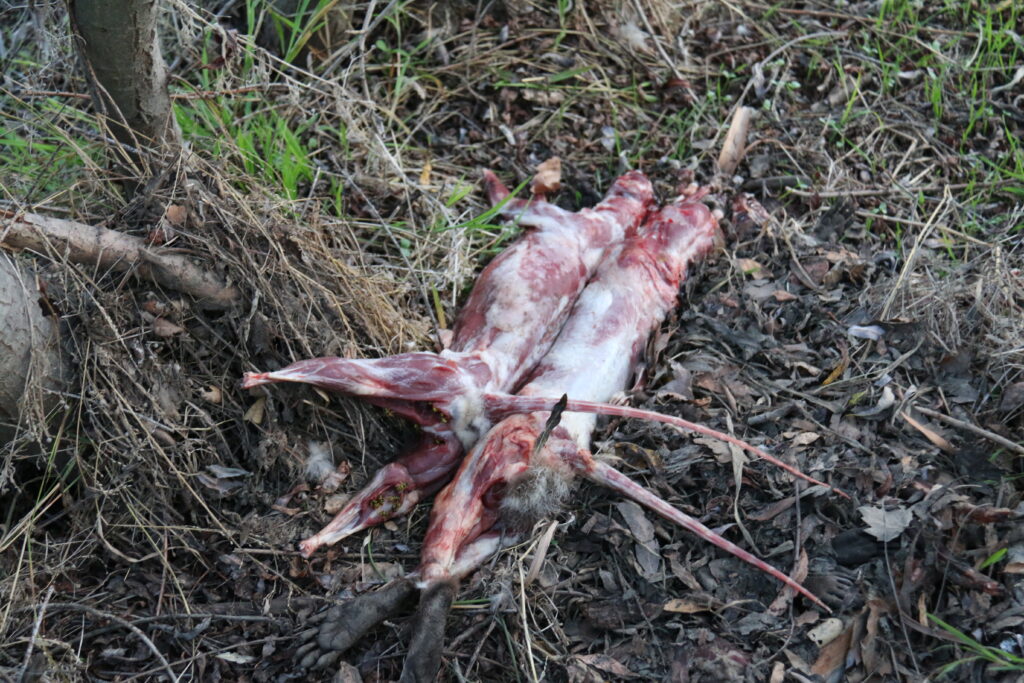
See the violence of Discipline Raccoon Style.

“How to be a Fox” The article about Bill and his ethological approach to his study of the gray fox is online here. Many are calling this a major article in the wildlife press.

Be Sure to check out our YouTube Channel for some incredible wildlife videos.
Grey Fox General Health
NEWS FLASH — The pair of gray foxes that were in the Palo Alto Baylands Nature Preserve several months ago have left the region probably due to the influx of red foxes, and a coyote pack of five – four youngsters and an adult. Presently, we are monitoring them.
Gray Fox, Baylands Goals
Within the permit that allows the Urban Wildlife Research Project to conduct its study of the behavior of the gray fox at the Palo Alto Baylands Nature Preserve, the objectives covered are:
- Monitoring of urban gray fox Denning sites in Palo Alto Baylands.
This is being accomplished during the period when the gray foxes use a den site. It is one of the prime locations for gathering most of the behavioral data of the litter and for adults alike.
- Assessment of status and population trends of Baylands urban gray foxes.
Since January 2019 a pair of resident gray foxes have claimed territory at the Palo Alto Baylands Nature Preserve.
- Identification of habitat features that promote the presence of urban gray foxes.
The Urban Wildlife Research Project is working on a project to remove the concrete from Matadero Creek that will create linkages and corridors between the Santa Cruz Mountain Range and the Palo Alto baylands..
- Assessment of reproductive success and identification of factors that promote successful reproduction.
Open the pinch-point along Matadero Creek by developing thickets that link one area to another, instead of the present island-like habitat.
- Identification and assessment of possible dispersal travel routes.
Dispersal routes move between the Palo Alto Baylands Nature Preserve and the Shoreline region over in Mountain View. In a north-westerly direction the dispersal corridors run just behind the homes bordering the marshlands in East Palo Alto.
Read more about UWRP in the news: